
Overview
The clownboard works exactly like the starboard, but with the clown. Where the star marks what a server loves, the 🤡 marks the message that is worth a laugh at someone’s expense: the worst take of the week, the plan that went wrong, the thing that made everyone laugh for the wrong reasons. When a message gets enough 🤡 reactions, Petto copies it to the clownboard channel. It has its own channel, its own emoji, its own count and its own reposts, so a server can have both boards at once, or only one.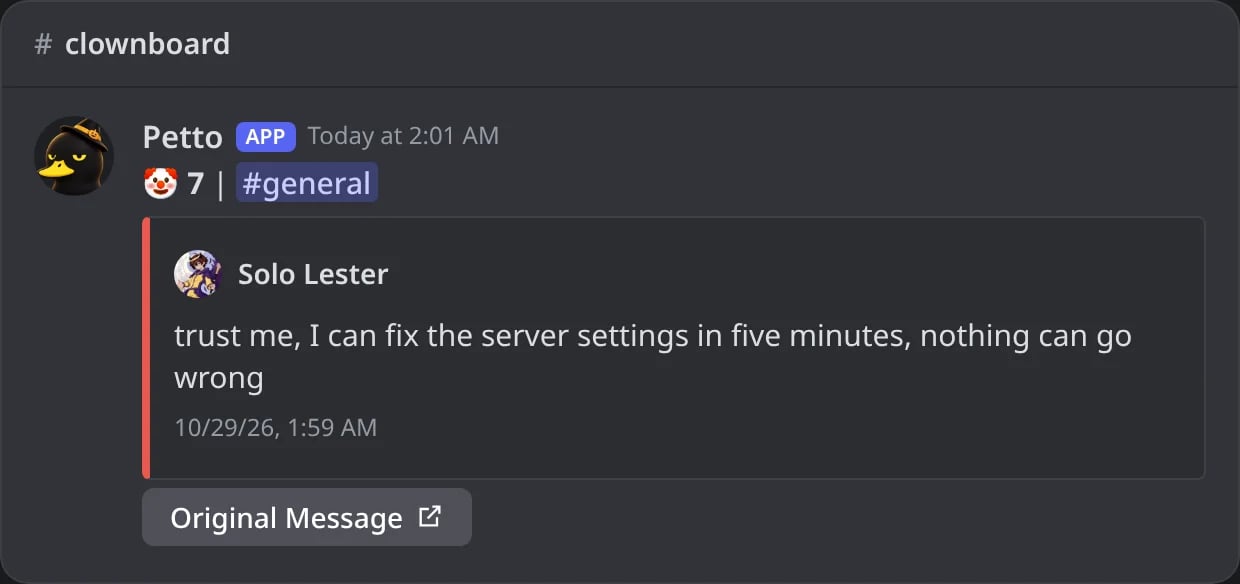
In Discord: a message that got seven 🤡, reposted in the clownboard.
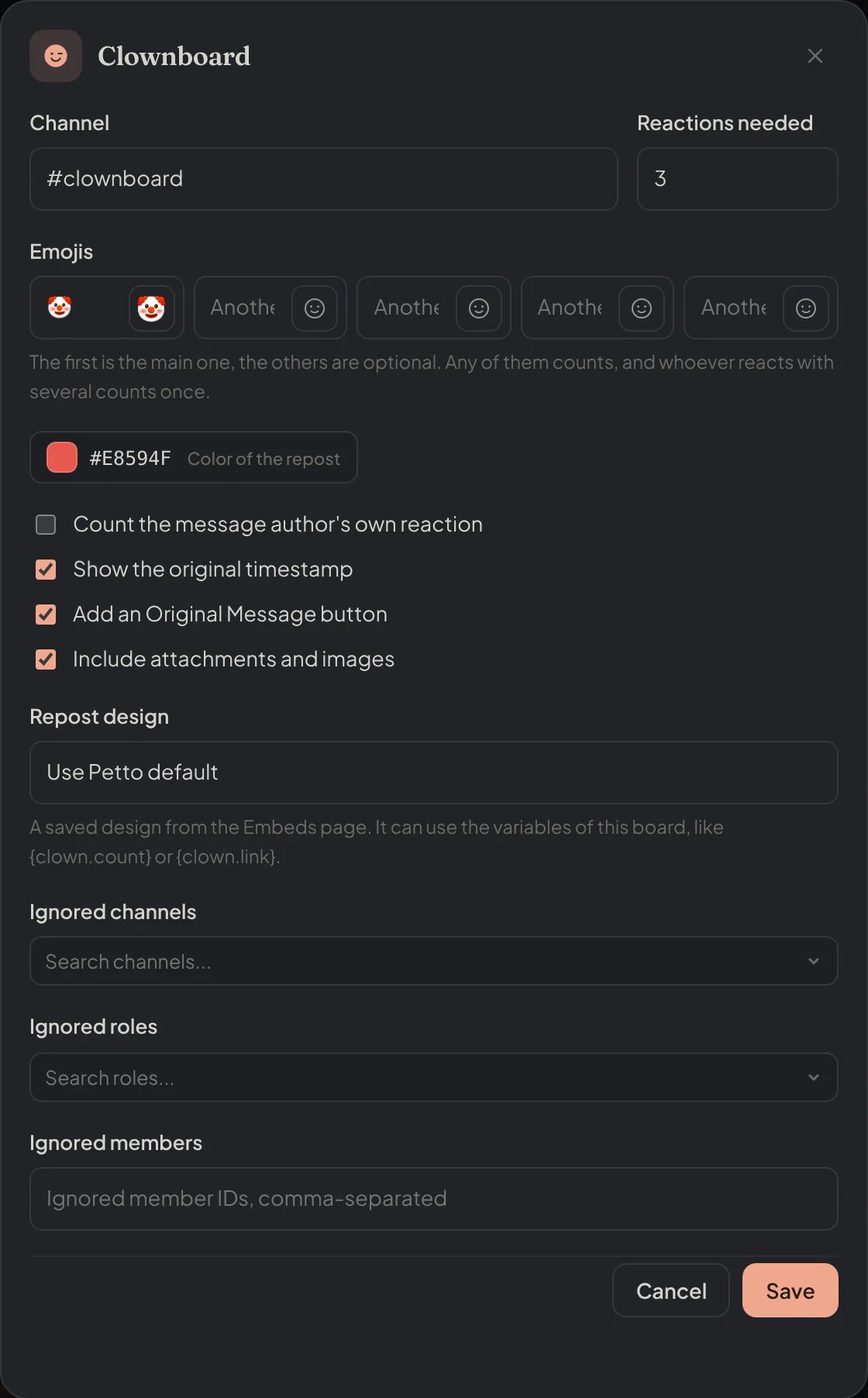
Dashboard → Community → Boards: the window of the Clownboard, opened with its edit button.
Setting it up
!clownboard set
!clownboard set
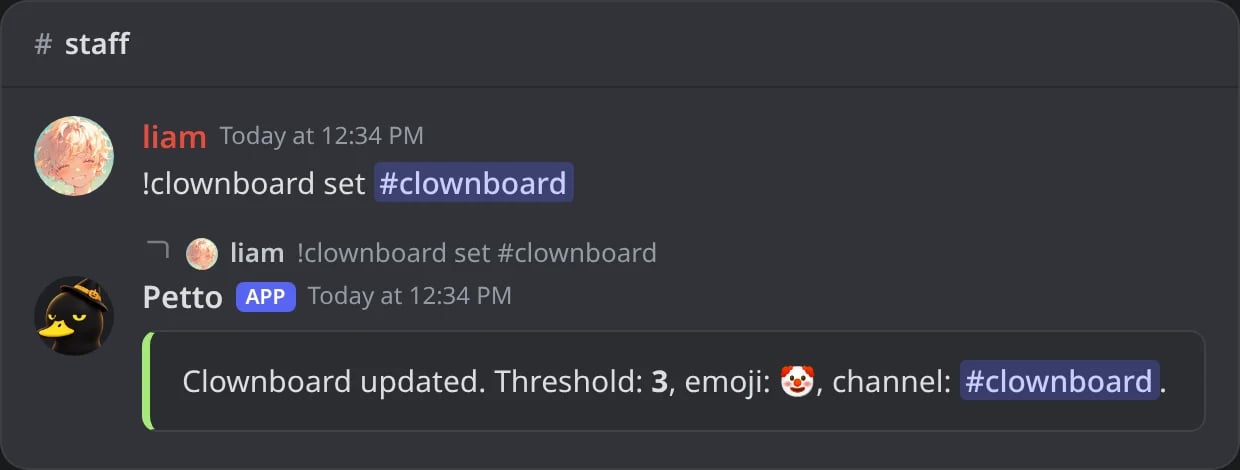
In Discord: the channel of the reposts.
!clownboard enable
!clownboard enable
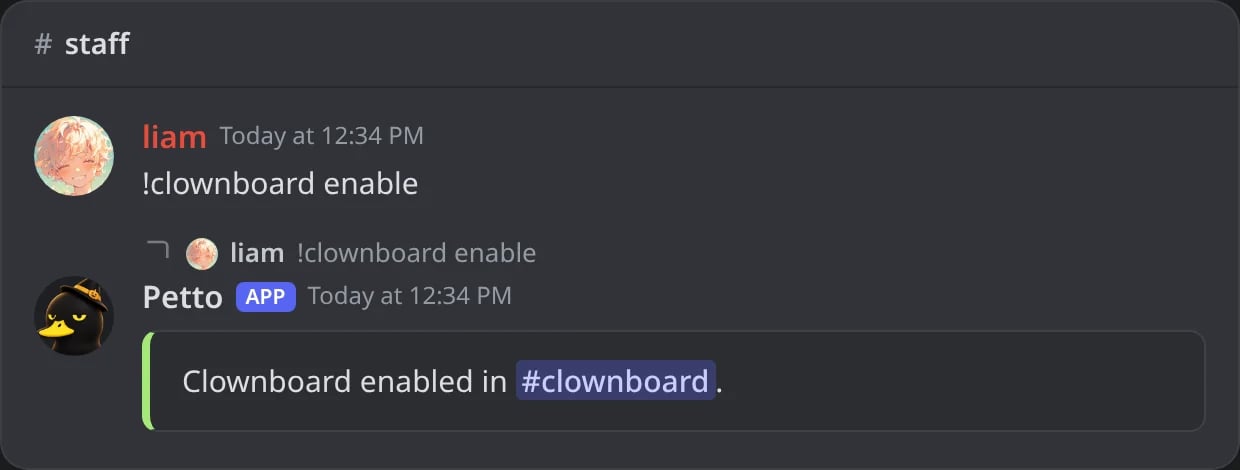
In Discord: the board turned on with the current settings.
!clownboard disable
!clownboard disable
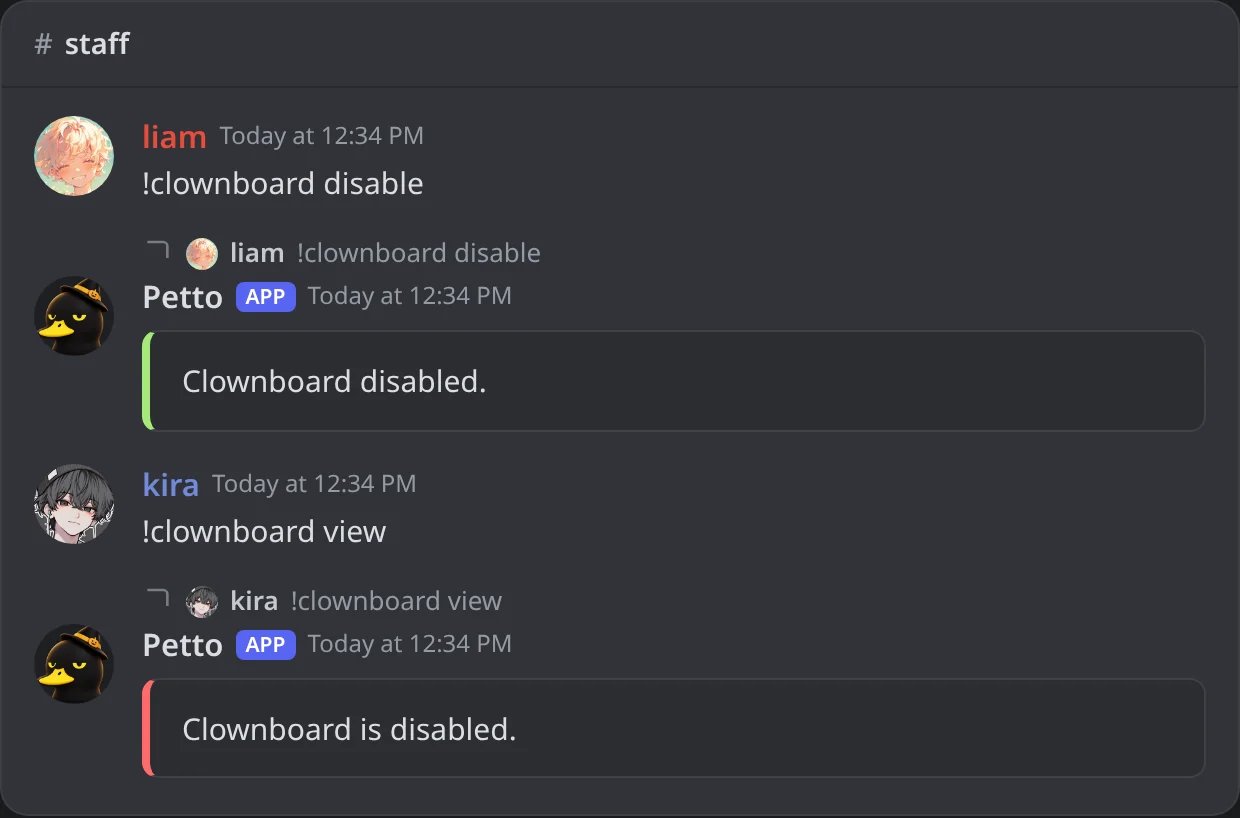
In Discord: the board turned off; view then says it is disabled.
!clownboard threshold
!clownboard threshold
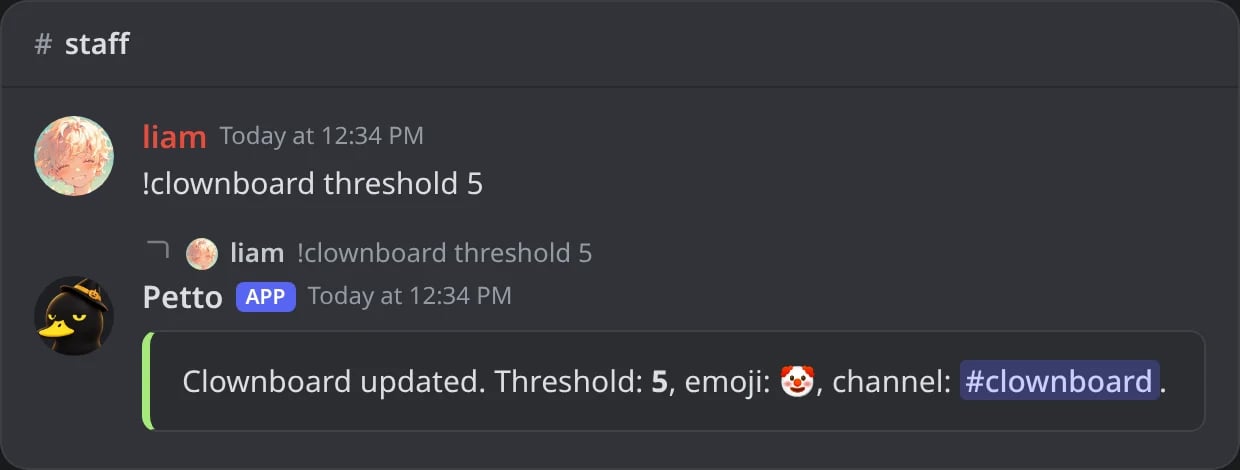
In Discord: how many reactions a message needs.
!clownboard emoji
!clownboard emoji
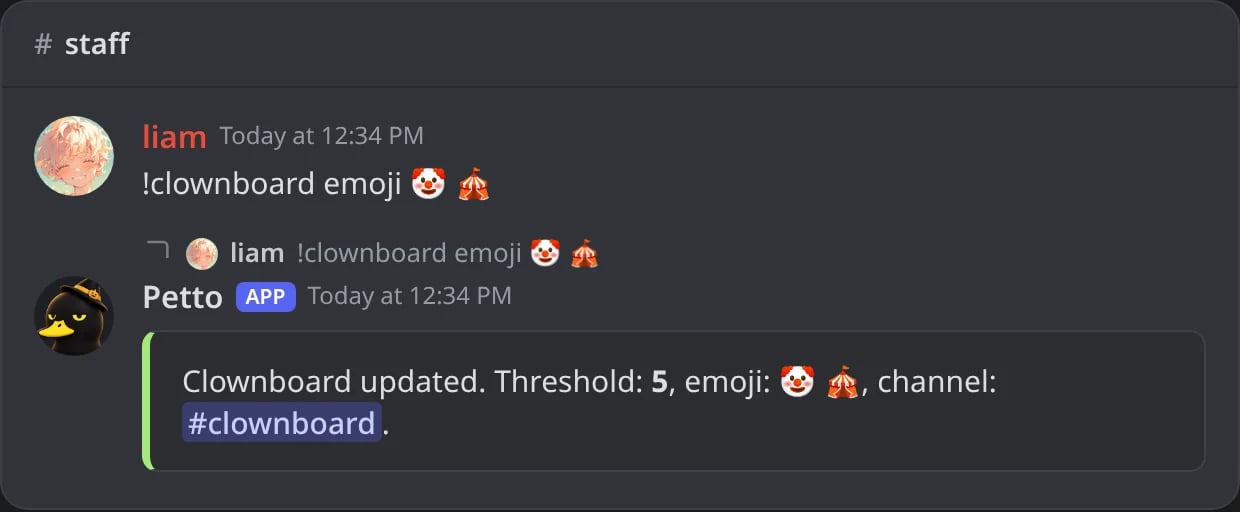
In Discord: two emojis: the first is the main one.
!clownboard view
!clownboard view
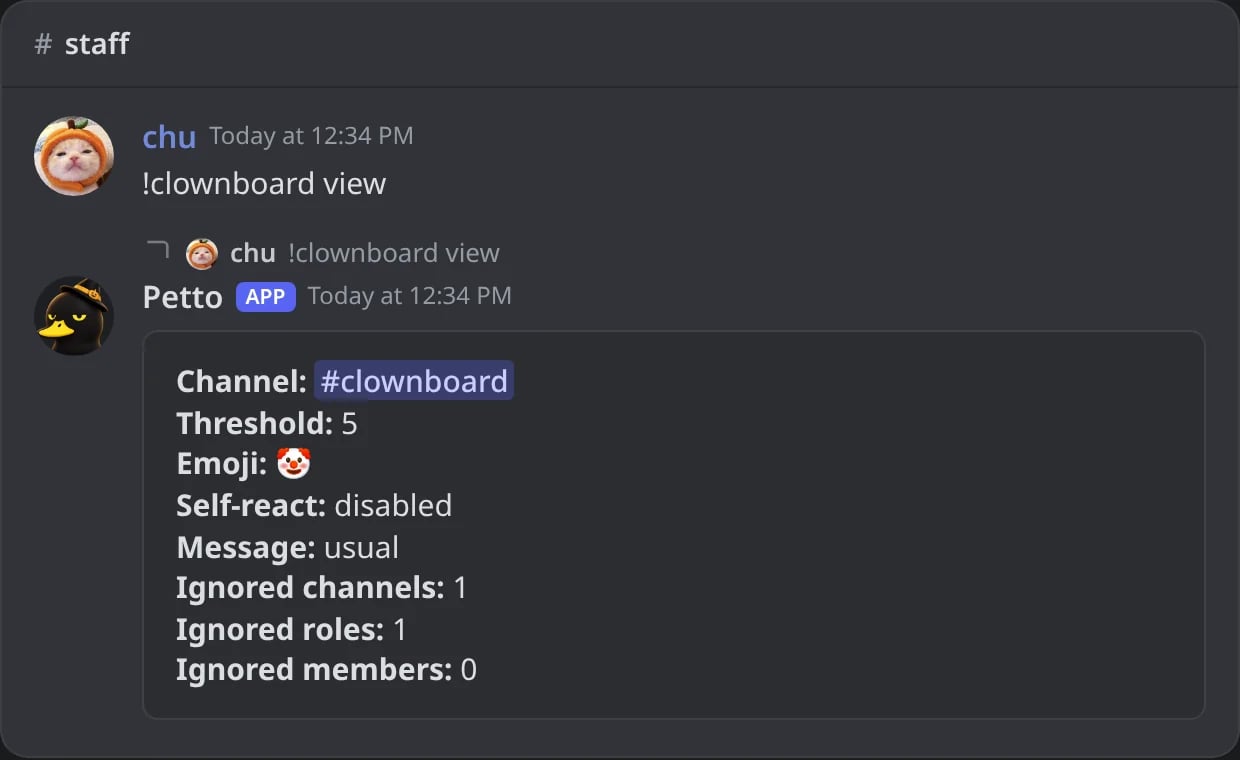
In Discord: the current settings.
setchooses the channel where the reposts go.enableturns it on with the current settings, anddisableturns it off (and forgets the reposts it made).thresholdis how many reactions a message needs (from 1 to 100, default 3).emojiis the reaction that counts, a Unicode or a custom emoji (default 🤡). You can give up to 5 (!clownboard emoji 🤡 🎪): the first is the main one, a message counts with any of them, and someone who reacts with several counts once.viewshows the current settings.
!cwb and !clown.
The rest
Everything else is the same as in the starboard, with the same words:!clownboard selfclown <enabled>: let people count their own reaction (off by default).!clownboard ignore <channel|role|member> <target>andunignore: messages from there never reach the board.!clownboard message <template>(ornone): a saved embed for the reposts. It has its own{clown.*}variables:{clown.count},{clown.emoji},{clown.channel},{clown.link},{clown.author},{clown.content},{clown.image}and the rest, the same ones the starboard has as{star.*}.!clownboardconfigshows the whole configuration in one place.
!clownboard selfclown
!clownboard selfclown
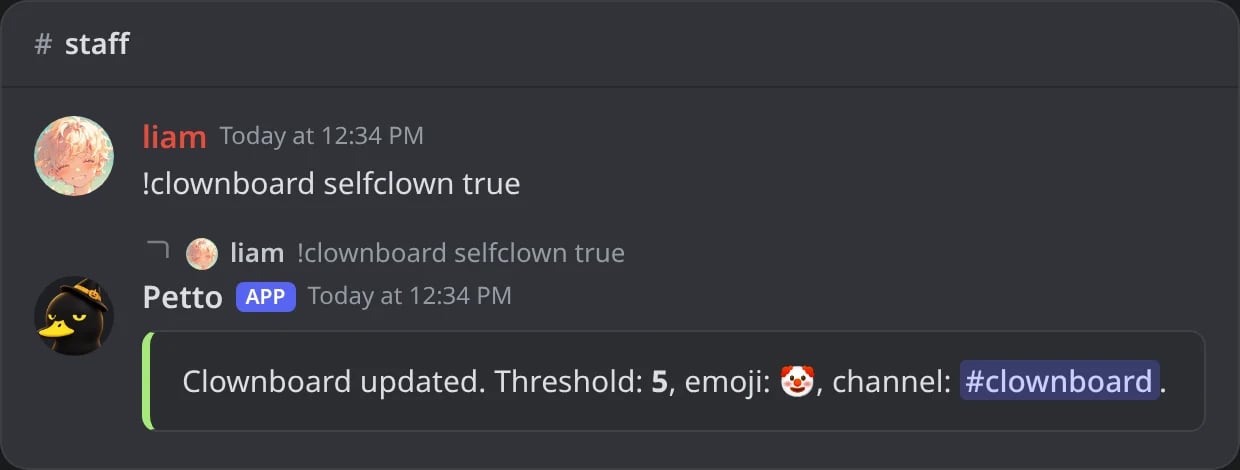
In Discord: the author's own reaction counts now.
!clownboard ignore
!clownboard ignore
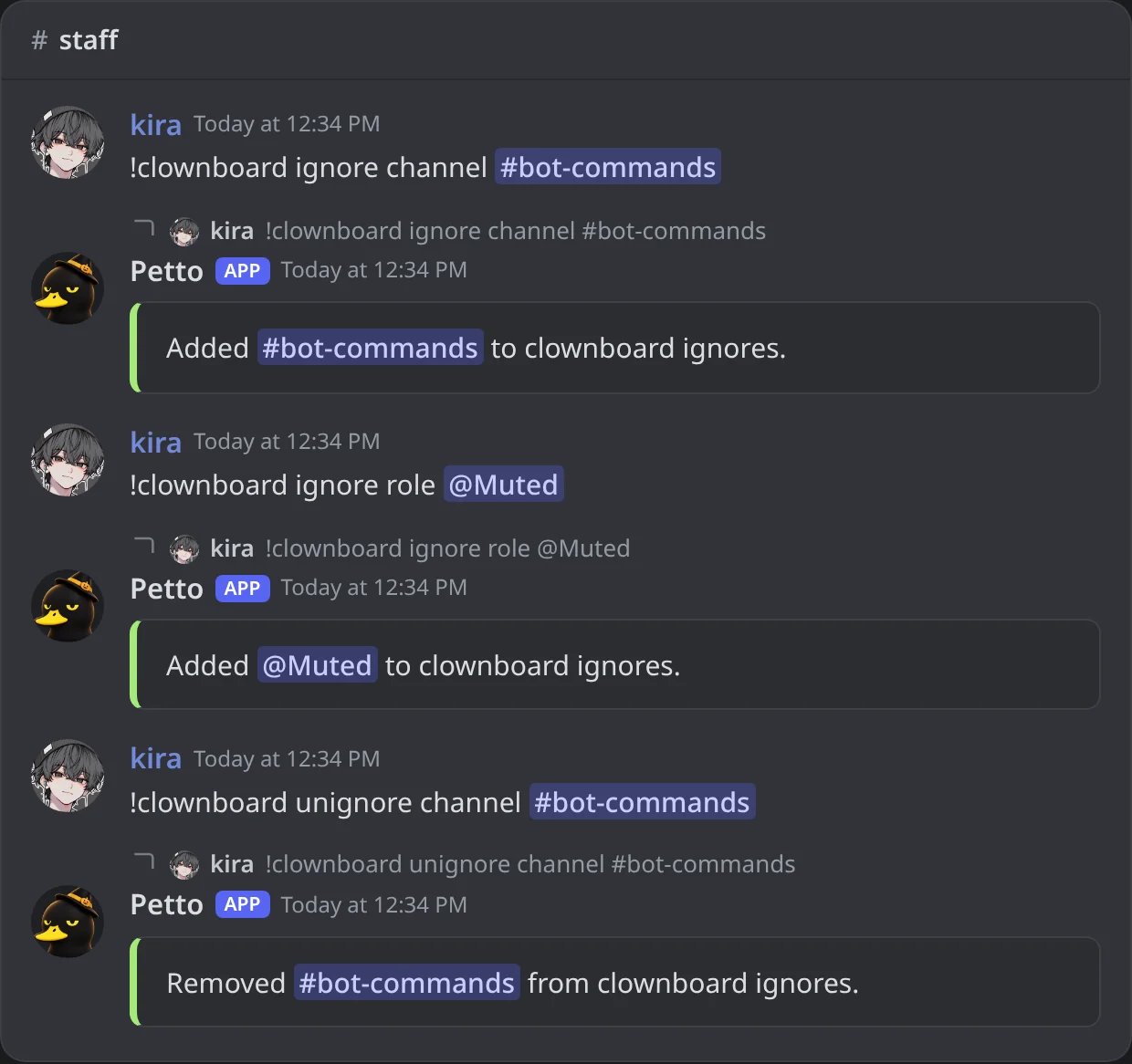
In Discord: a channel and a role ignored, and the channel taken back with unignore.
!clownboard message
!clownboard message
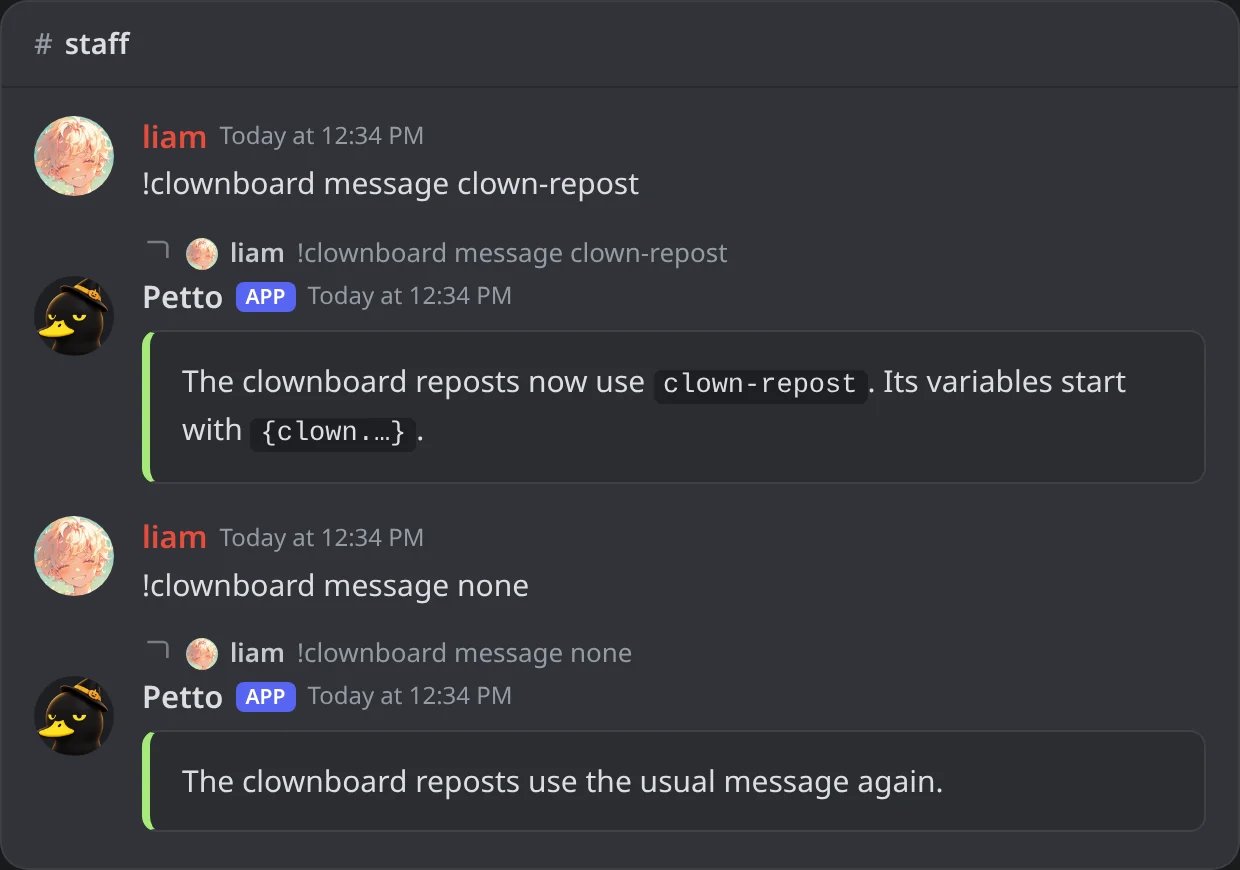
In Discord: a saved embed for the reposts, and none to go back to the usual one.
!clownboardconfig
!clownboardconfig
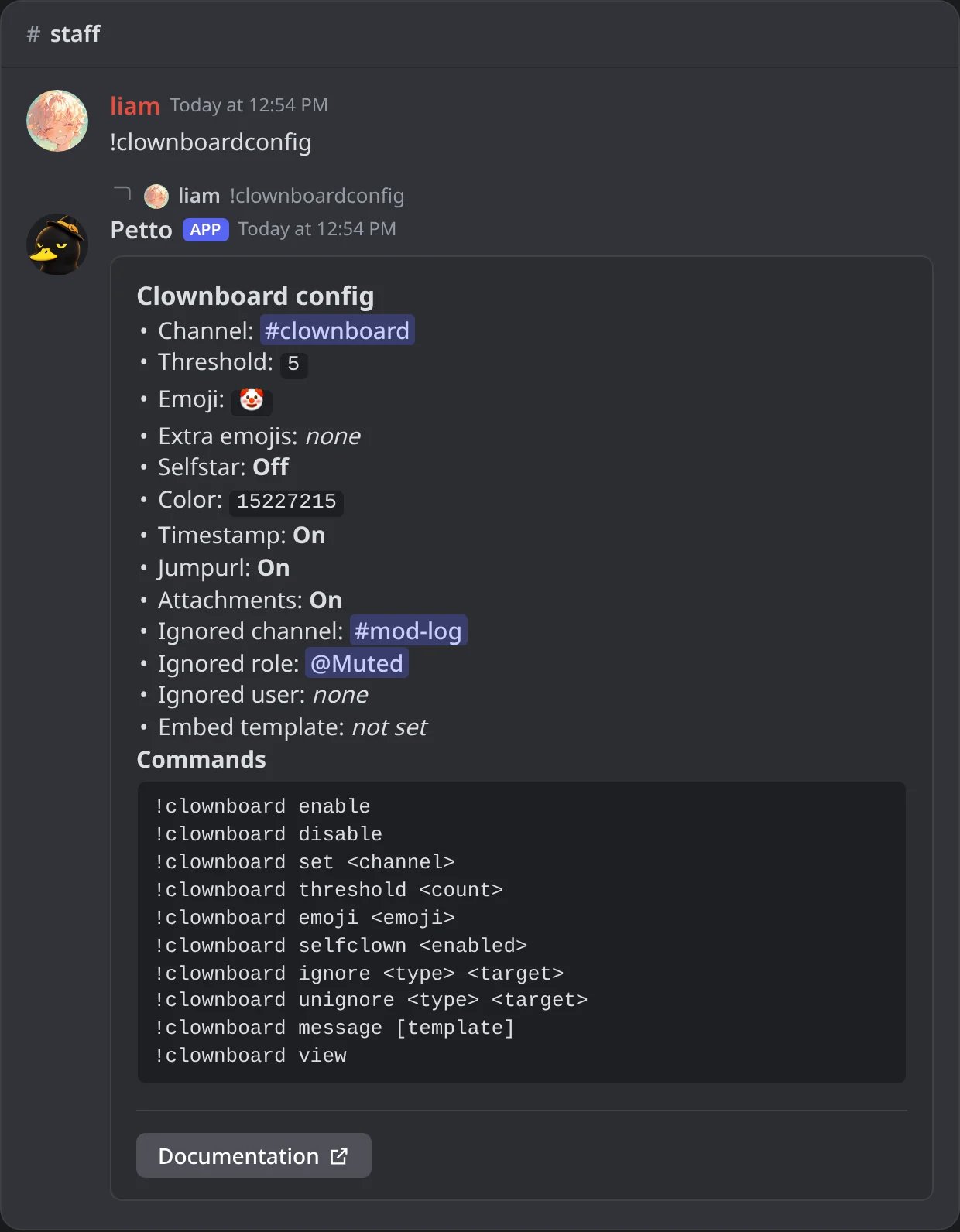
In Discord: the whole configuration of the clownboard.